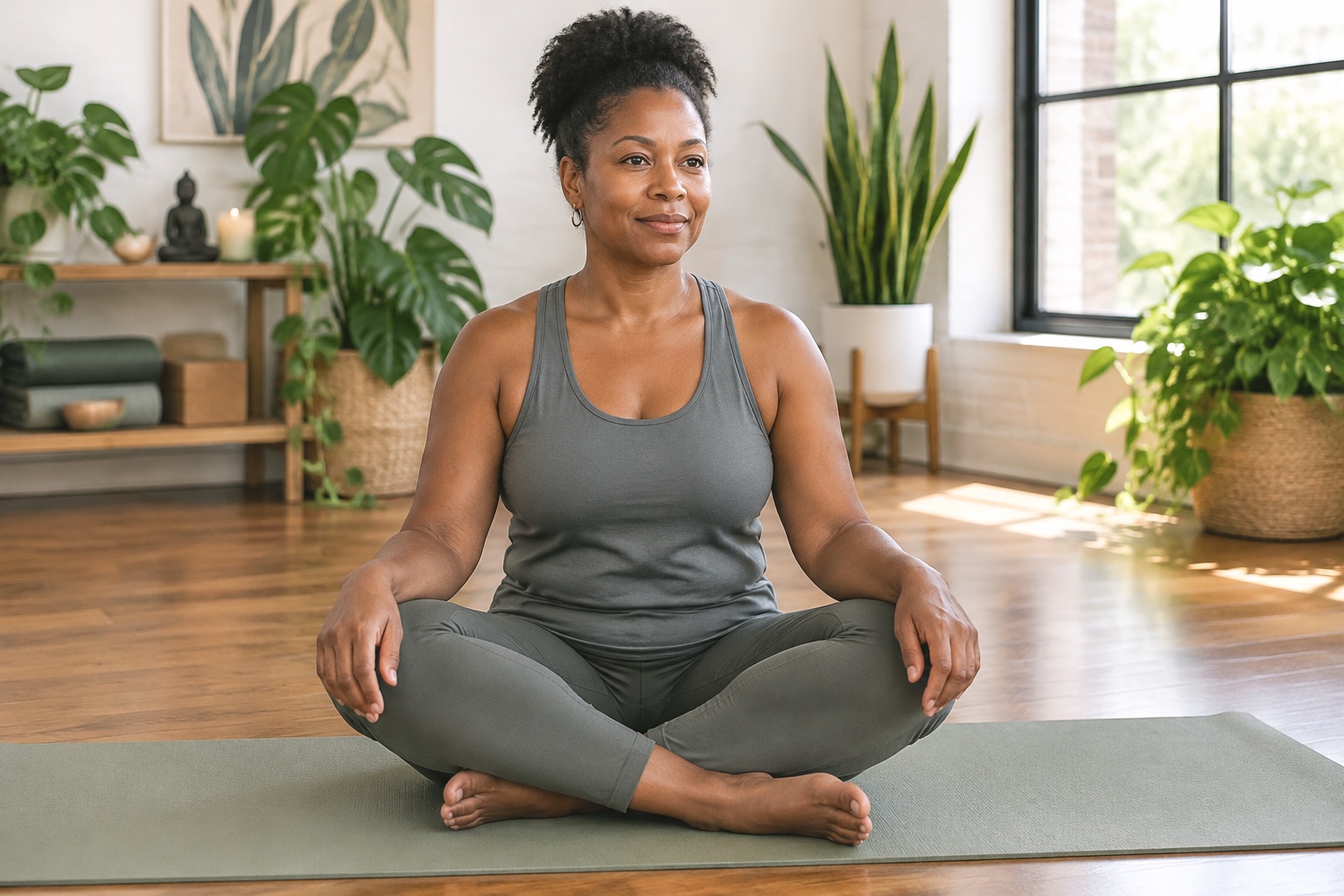
For general wellness education only, not medical advice, diagnosis, therapy, or treatment. Yoga is not a substitute for professional care. Body size does not determine your worth or cognitive health. Discuss persistent memory concerns, unexplained weight changes, or individual movement needs with a qualified healthcare professional.
Could a gentle yoga practice offer a little space for your attention when life feels full? If you find yourself moving between responsibilities and wishing you could feel more present, it is understandable to wonder what yoga might offer. Research gives us a thoughtful starting point—not a promise that a pose will fix forgetfulness.
The study behind this article
Neha P. Gothe and Edward McAuley’s Yoga and Cognition: A Meta-Analysis of Chronic and Acute Effects appeared in Psychosomatic Medicine in 2015. This article is an original educational summary of that peer-reviewed paper, not a copy of it and not itself peer reviewed. Read the original research on PubMed.
This is an older quantitative review, not a qualitative study. As of November 2026 it is more than ten years old, so it is presented here as background research rather than part of our newer qualitative research series.
What did the researchers examine?
The review combined 15 randomized controlled trials and seven acute exposure studies. The trials examined yoga practice over time, while acute studies looked at shorter-term exposure. Studies needed objective cognitive measurements and enough information to calculate an effect size.
Cognitive health is a broad topic. Here, the researchers examined test performance in areas including attention and processing speed, executive function, and memory. Executive function includes abilities such as planning and responding flexibly. A test result is not the same thing as an assessment of someone’s overall daily functioning.
What did they find?
Across randomized trials, the review reported a positive overall effect on cognition (Hedges g = 0.33). Attention and processing speed showed a statistically significant effect, as did executive function. The memory result in the randomized trials did not meet the conventional statistical significance threshold (p = 0.051).
The acute studies reported a larger overall effect, with positive results across the cognitive areas examined. Those shorter-term findings should not be treated as proof of lasting changes. Effect sizes summarize differences in test performance; they do not tell us that an individual will remember a particular amount more.
Why the limits matter
The authors highlighted small samples, different participant populations, varied yoga practices and amounts, and many different cognitive tests. These differences make it difficult to translate the findings into one ideal routine. They called for more rigorous research.
- The review does not establish that yoga prevents dementia or treats memory problems.
- It does not guarantee cognitive improvement for every person or every yoga class.
- It does not show that yoga-related weight loss improves cognition; weight change was not the question this review answered.
Where weight wellness fits—and where it does not
A separate review of yoga and weight-related outcomes found no overall effect on several body measurements, although some subgroup findings differed. Reading the two reviews together does not create evidence that changing body size through yoga improves attention. Explore our yoga and weight wellness research summary.
A gentle way to explore yoga
If yoga interests you, consider a beginner-friendly class with a qualified instructor who offers chair-based or other adaptations. Comfort, accessibility, and enjoyment can guide your choice rather than a target for memory or weight. These are general self-care ideas, not an intervention prescribed by this paper.
You might reflect afterward: Was this practice comfortable? Did I enjoy making time for it? Would a different pace or setting feel more supportive? Stop if a movement causes pain or dizziness. Seek individualized guidance when health conditions or injuries affect movement.
Continue in the Mind Path for reflective practices, or explore the Ritual Path to make room for a realistic routine. Persistent or new memory concerns deserve professional assessment, not assumptions about stress or body size.
Reference
Gothe, N. P., & McAuley, E. (2015). Yoga and Cognition: A Meta-Analysis of Chronic and Acute Effects. Psychosomatic Medicine, 77(7), 784–797. doi:10.1097/PSY.0000000000000218. This summary draws on the indexed abstract; it is not a new systematic review of current evidence.
Make a little room for yourself
Pair your next quiet read with a self-care favorite from the Luvmee Body shop.
Subscribe and open your free 7-Day Gentle Wellness Reset checklist — small self-care steps, at your own pace.
Thank you for visiting! Leave a comment